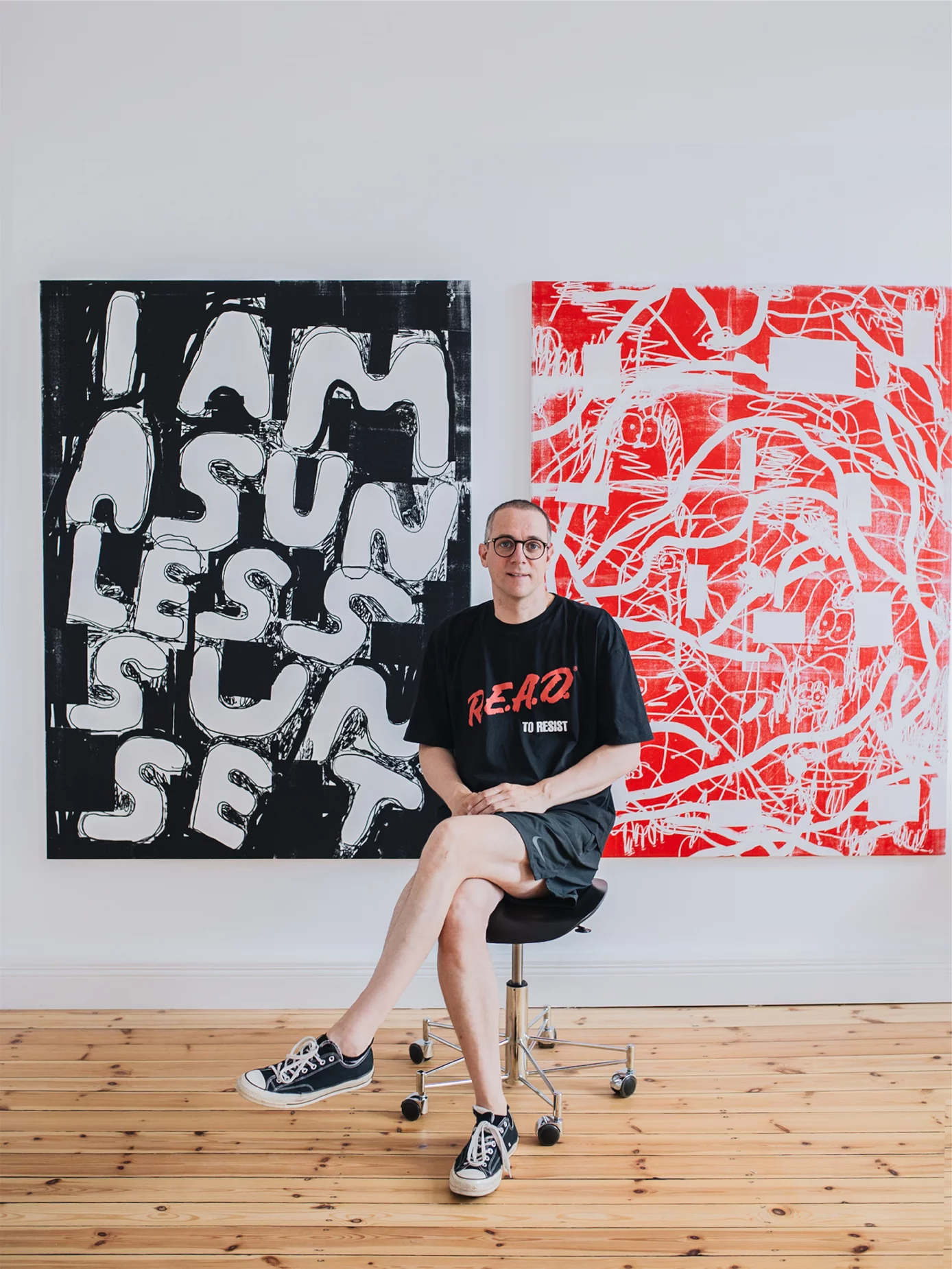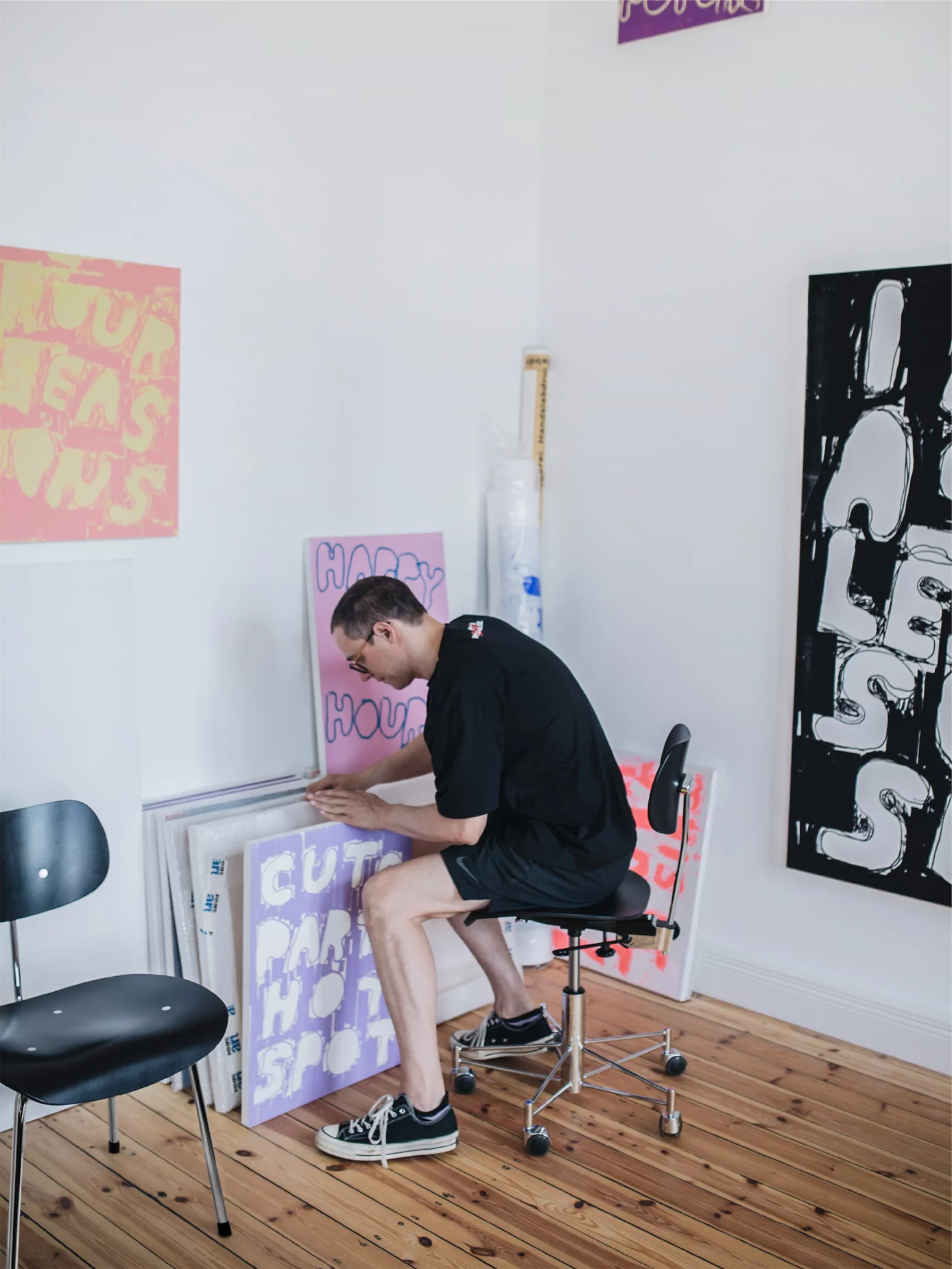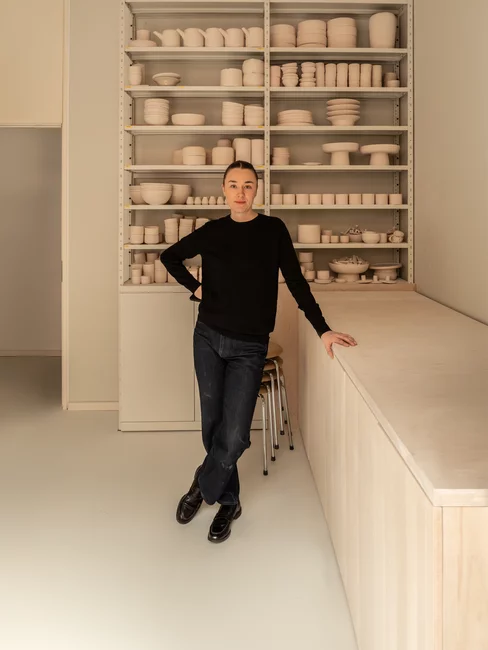
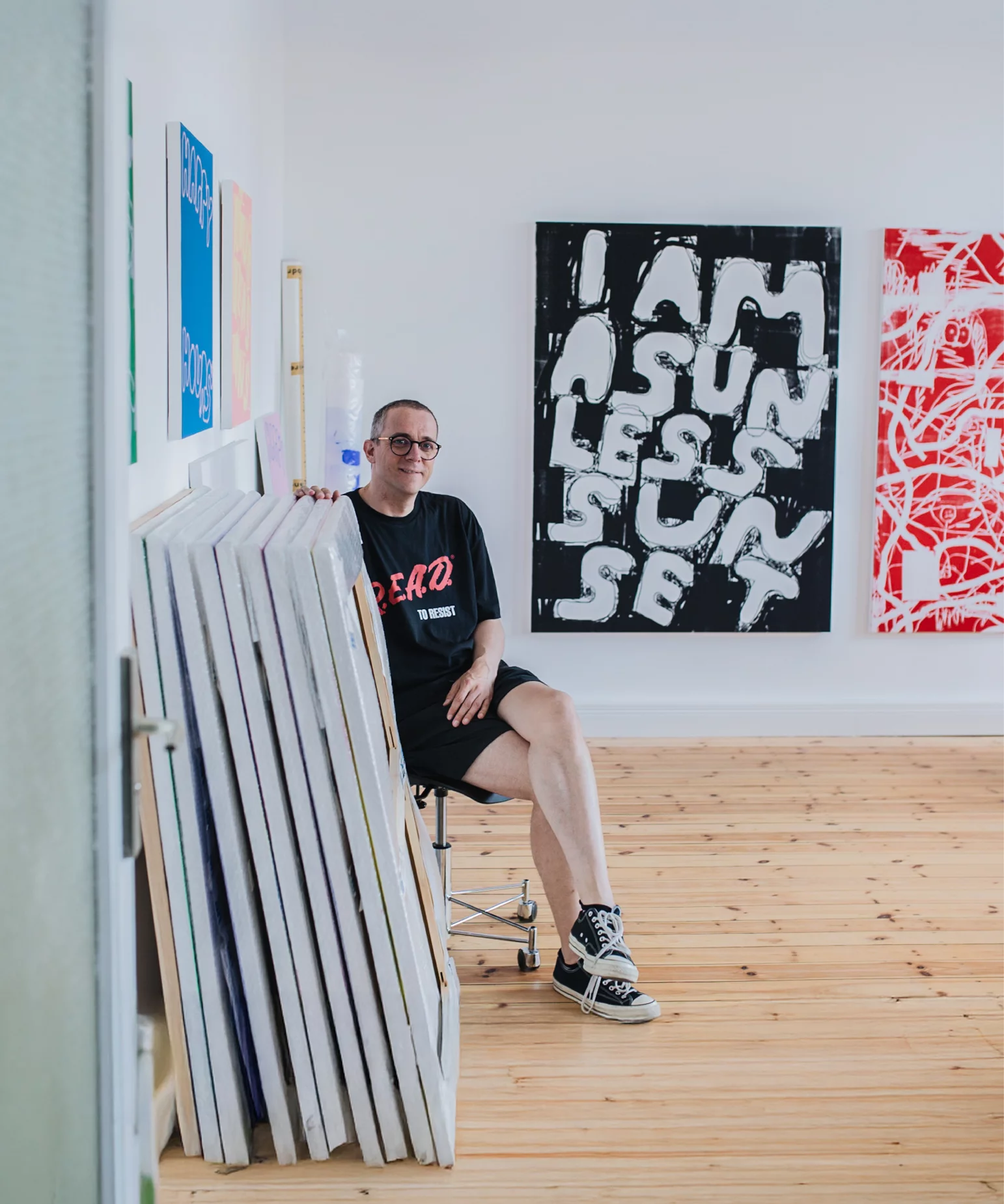
In his Berlin studio in Reinickendorf, Stefan Marx shares a workspace with musicians and visual artists. The desk moves around – always in good light, always flexible. In this conversation, Stefan Marx talks about what a typical day in the studio looks like, why black and white remains his first choice while color still plays a major role – and why a battered yellow folding chair rescued from the curbside in 2001 is still very much part of the furniture.
Where are you, and what does your studio look like?
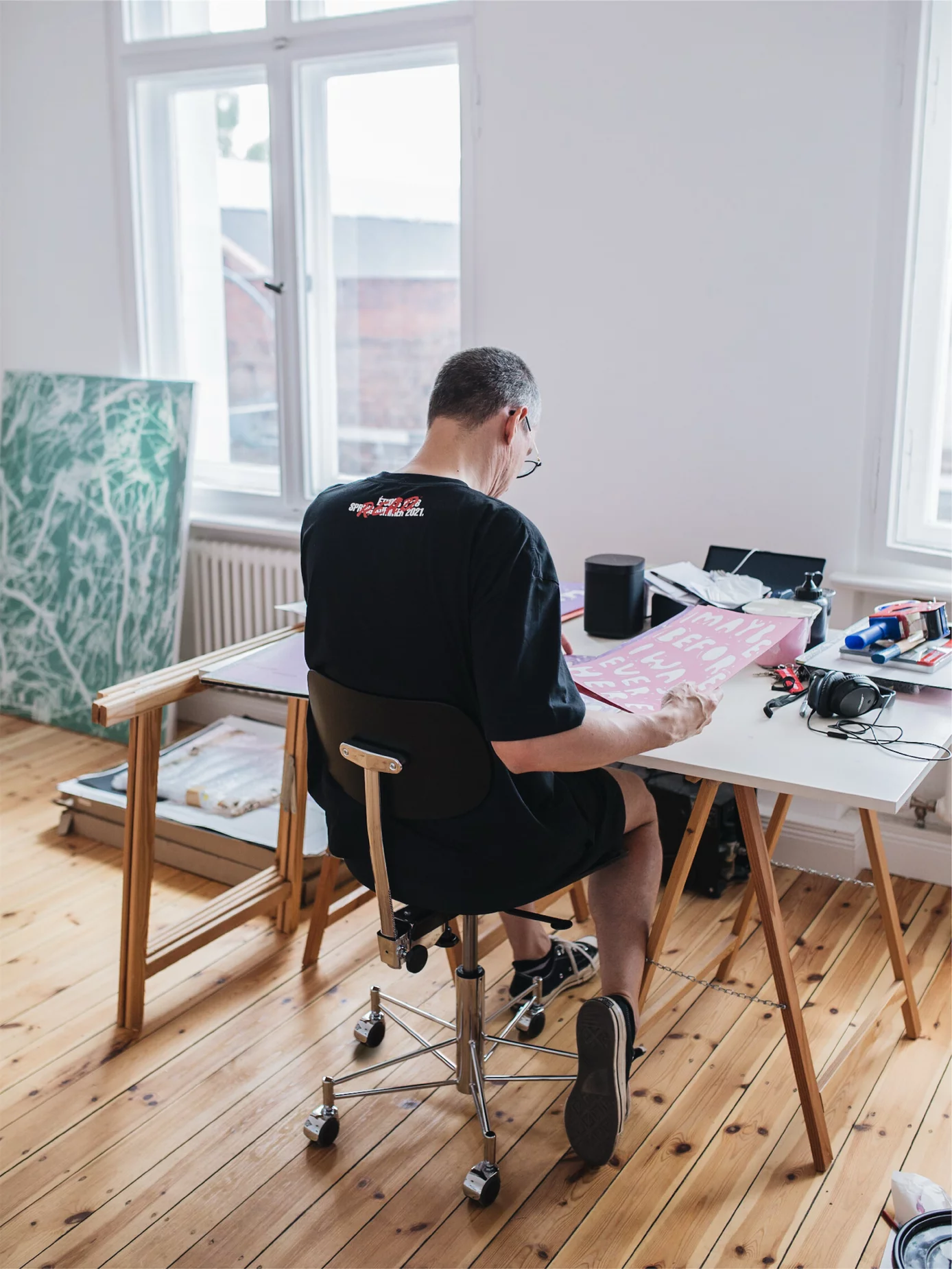
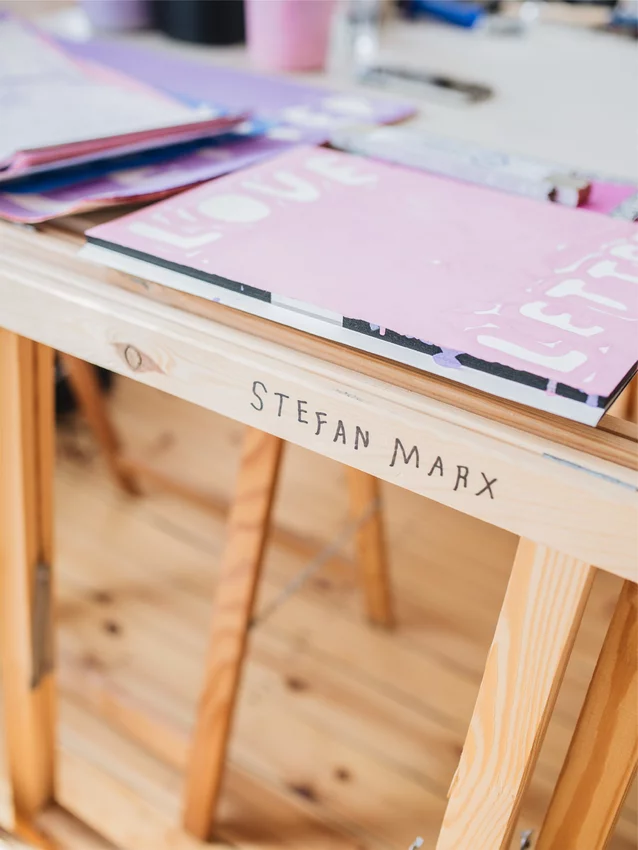
SM We’re in my workspace in Berlin Reinickendorf. We have a studio community here with musicians and visual artists. The desk moves around – usually in good light and often right in the middle of the room. Because I work on large formats, everything in the studio needs to stay flexible. It’s important to be able to dismantle the desk at short notice to work on larger pieces horizontally. A small additional worktable can also be set up when needed.
What do you do at your desk, and what does your everyday routine look like?
SM At the desk I mostly draw and paint, write, and make phone calls. Sometimes two of us sit there to drink coffee or get some work done on the laptop. But mostly I draw there – that’s still the best part. My daily routine varies quite a bit. I also draw at home a lot, where I have a second workspace. During breaks I usually step outside, chat with the other artists or musicians here in the building, or just hang out on the sofa for a bit.

I love having things put away and not seeing finished work anymore – it creates more space to approach new things.
You’re known for large-scale black-and-white works, but you also work a lot with color. How do you make your color decisions?
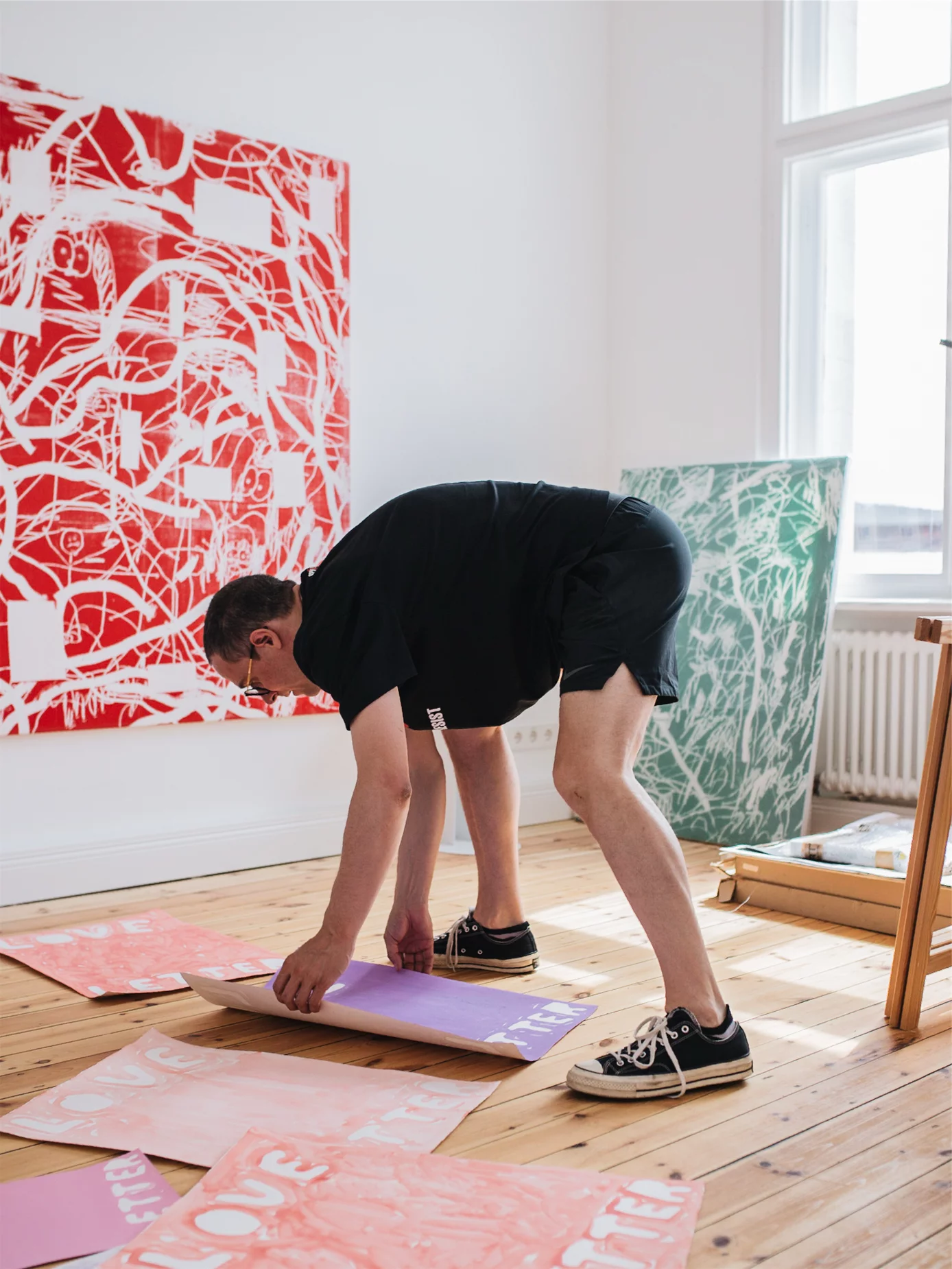
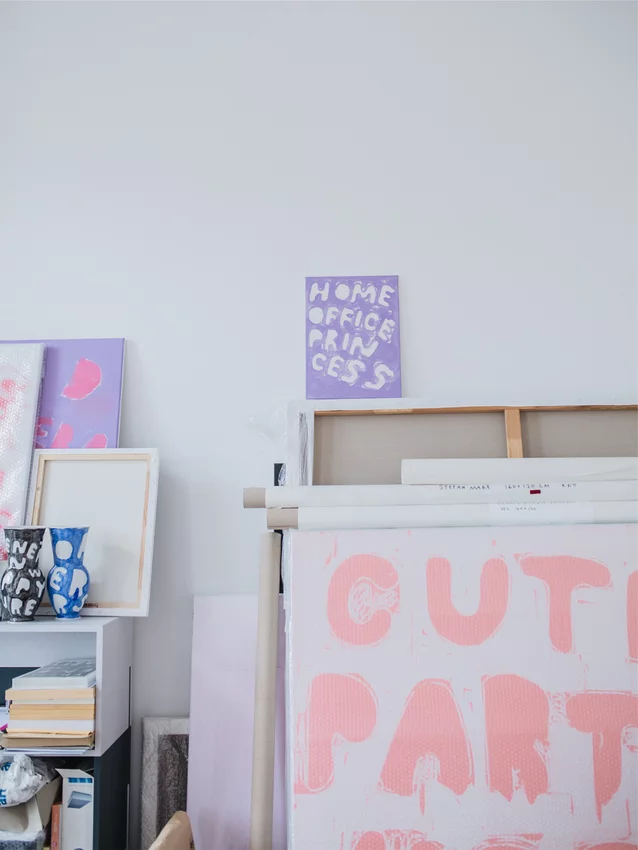
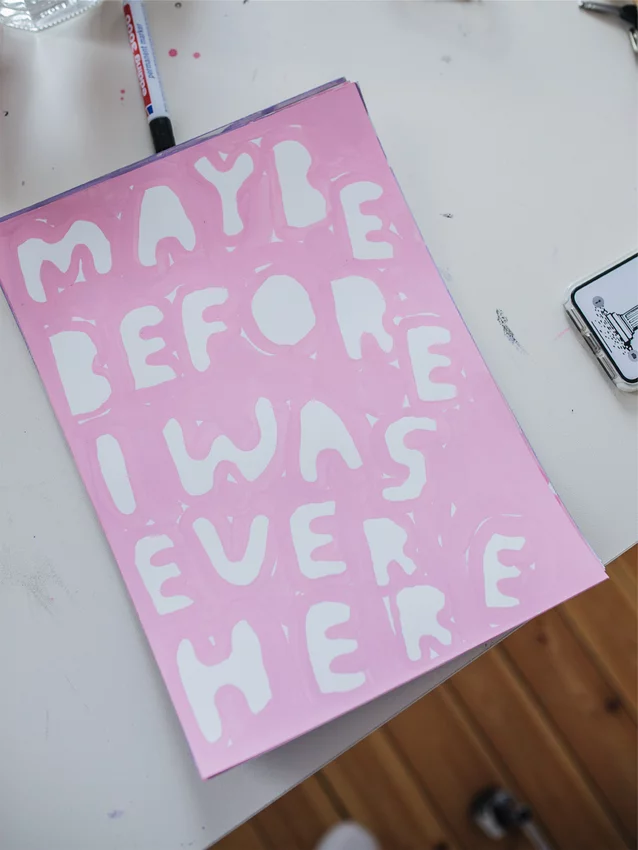
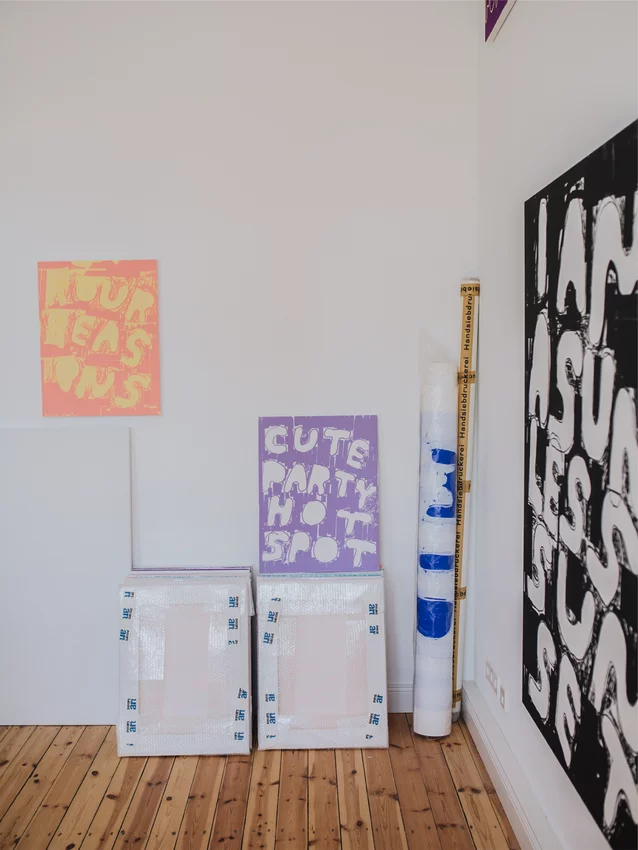
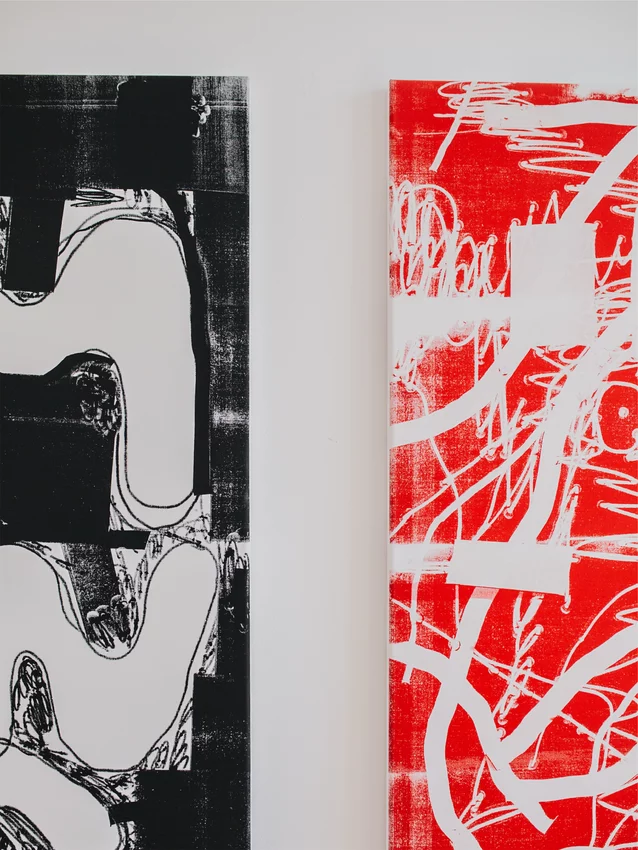
SM Fundamentally, I love the simplicity of just drawing or expressing something, and black and white is my first choice for that. Alongside that, I have a lot of fun with color – and it can turn out very differently each time. I used to work a lot with watercolors; since 2016 I’ve been drawing landscapes using an extensive palette of pastel chalks. Since I started making monotypes, I mix many color tones from pure pigment. These often reinforce the lettering and word-based works in a particular way.
Creative chaos or structured system?
SM Structured, by far – the chaos happens elsewhere. It helps to keep the immediate environment reasonably tidy and organized. I love having things put away and not seeing finished work anymore – it creates more space to approach new things and gives a clearer view of what lies ahead.
How do you choose the furniture that makes it into your studio?
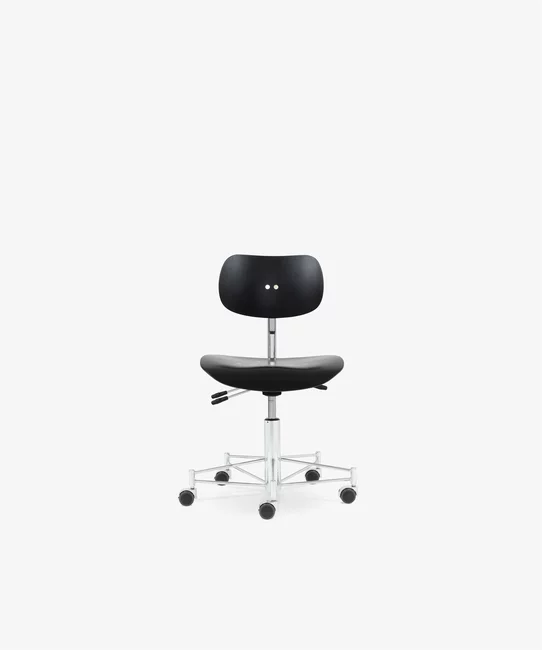
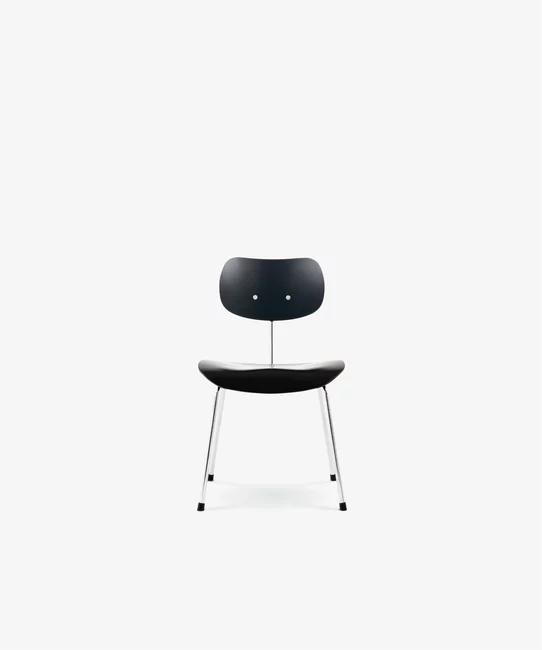
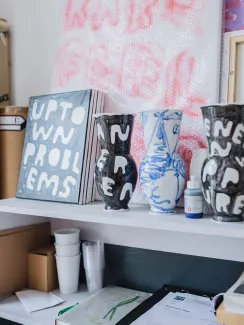
SM Furniture should be functional and look good. Design classics make the cut straight away, but there are also pieces by young furniture designers from my circle of friends in the studio. And an old yellow folding chair I rescued from the curbside back in 2001 is still here too. I just like it for some reason.
What can’t be missing from your workspace?
SM Paper, light, and quiet.