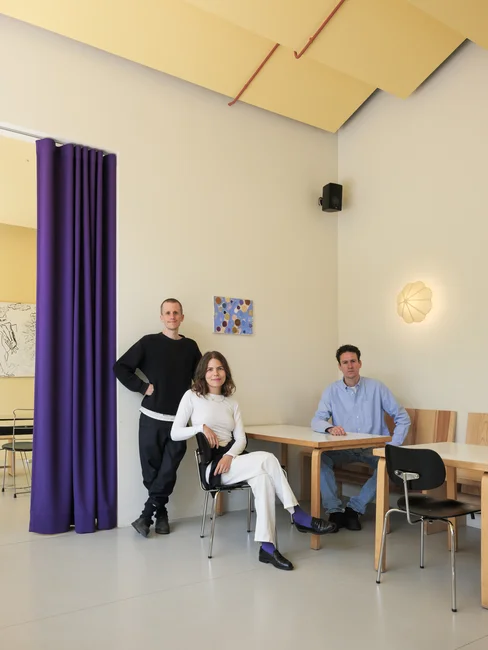
Leonie Herweg, Simon Freund and Nicolas Mertens have reopened the “Café Tiergarten” in Berlin’s Hansaviertel following a careful, heritage-sensitive restoration. The café is located in the Schwedenhaus, which was built by the architects Fritz Jaenecke and Sten Samuelson for the Interbau 1957. The buildings erected for this occation by renowned architects are regarded as outstanding examples of modern urban planning and of the architecture of classical modernism.
Where in Berlin is the café located, how large is the space, and what ideas do you want to realise there?
LH The café is located in the heritage-protected Hansaviertel, right by the Tiergarten in Berlin. It sits within an ensemble — more precisely, the so-called “Schwedenhaus” (Swedish House) by Fritz Jaenecke and Sten Samuelson — of the Interbau 1957, and is closely tied to the architectural history of the district. The premises comprise around 150 square metres of interior space, as well as a generous terrace overlooking the bungalow houses and the greenery. Alongside the café, we see the place as a meeting point for the neighbourhood and as a platform for cultural formats. We regularly host readings, talks, small concerts or culinary collaborations. In a way, it is an extension of our nearby art space GROTTO. We are especially interested in the connection between architecture, design, art and hospitality — and in the wonderful ability of a café to bring the most diverse people together.
How did the idea for the Café Tiergarten project come about? Had you been planning to open a café for some time, or was it a spontaneous idea?
LH Café Tiergarten grew out of the wish to bring a special place in our neighbourhood back to life. The building had stood empty for several years, yet many people in the Hansaviertel still remembered it as a former café. We often walked past, peered curiously through the windows and imagined all the things one could do here. When the opportunity to take over the space came about through various roundabout ways, it quickly became clear that we didn’t simply want to open a new café, but rather to build on the history of the place. Simon and I live just a few hundred metres away and feel very connected to the neighbourhood. Despite its central location in the Mitte district, the Hansaviertel feels almost like a village — people meet at the Friday market, in the only supermarket, or of course at Café Tiergarten.
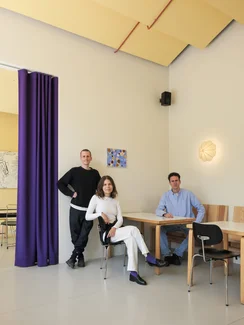
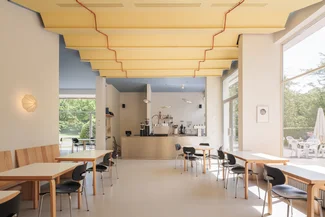
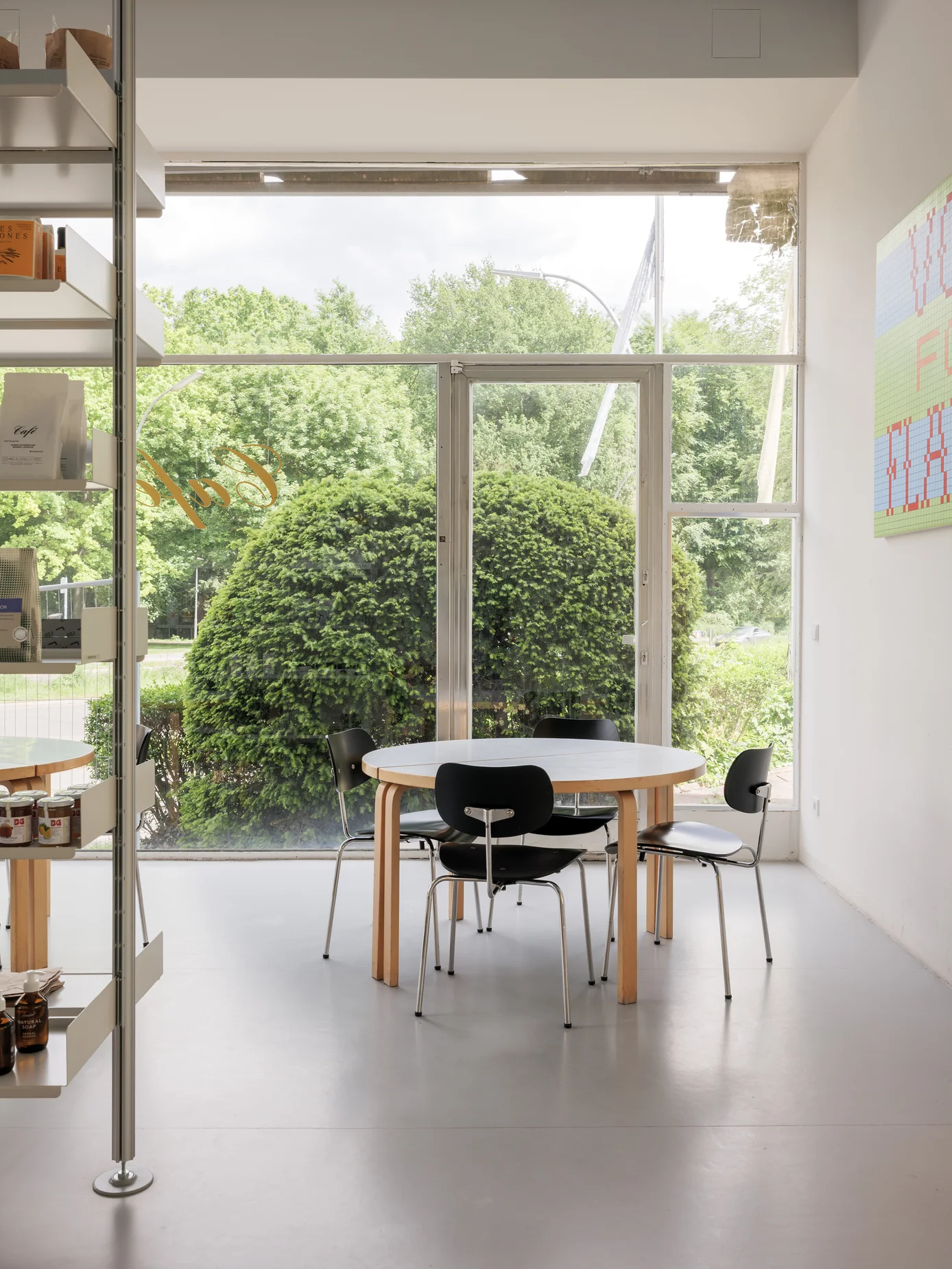
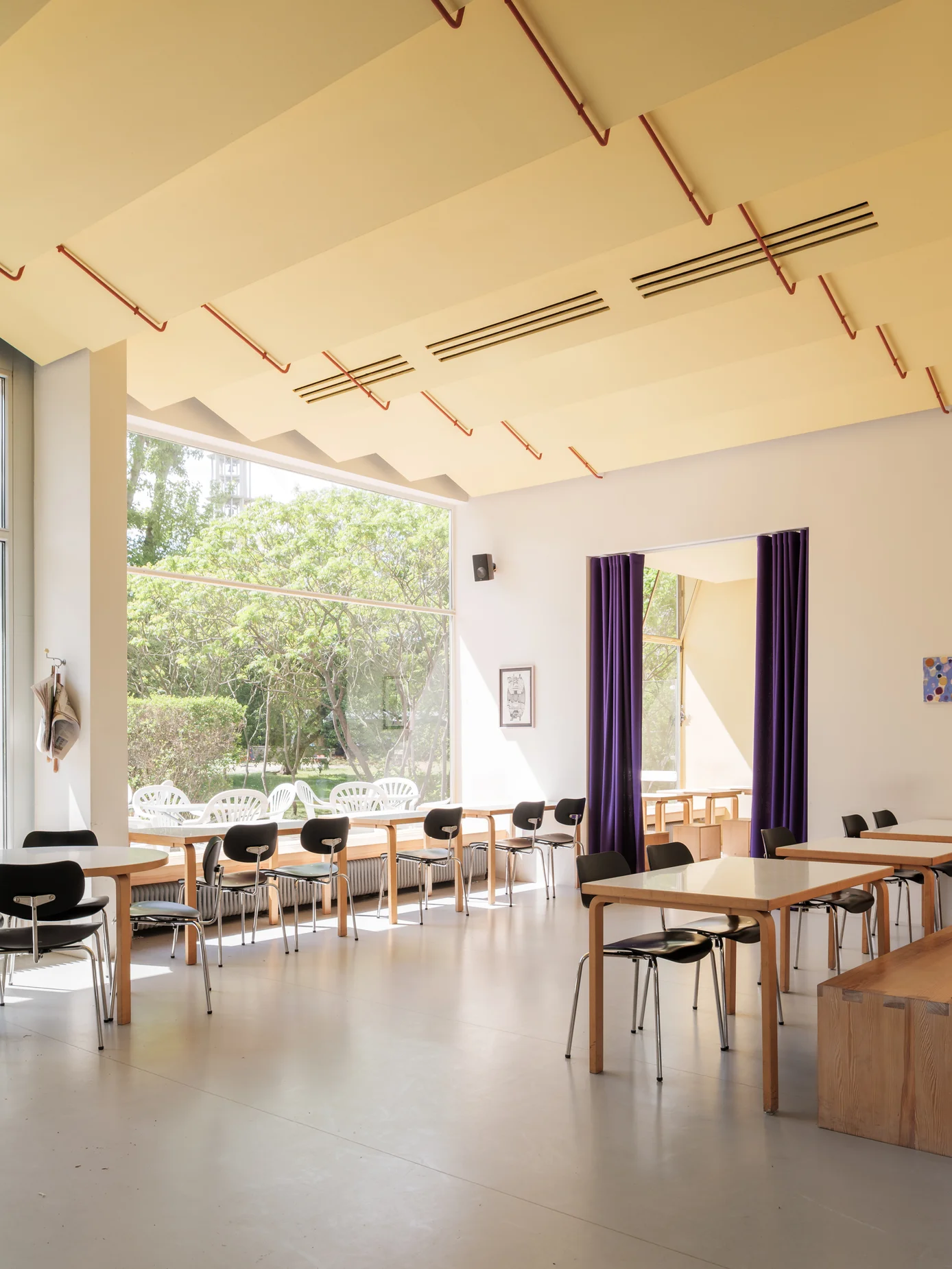
Alongside the café, we see the place as a meeting point for the neighbourhood and as a platform for cultural formats.
Who is responsible for the interior design, and how did the design direction develop? Were there experiences from earlier projects that fed into the design decisions?
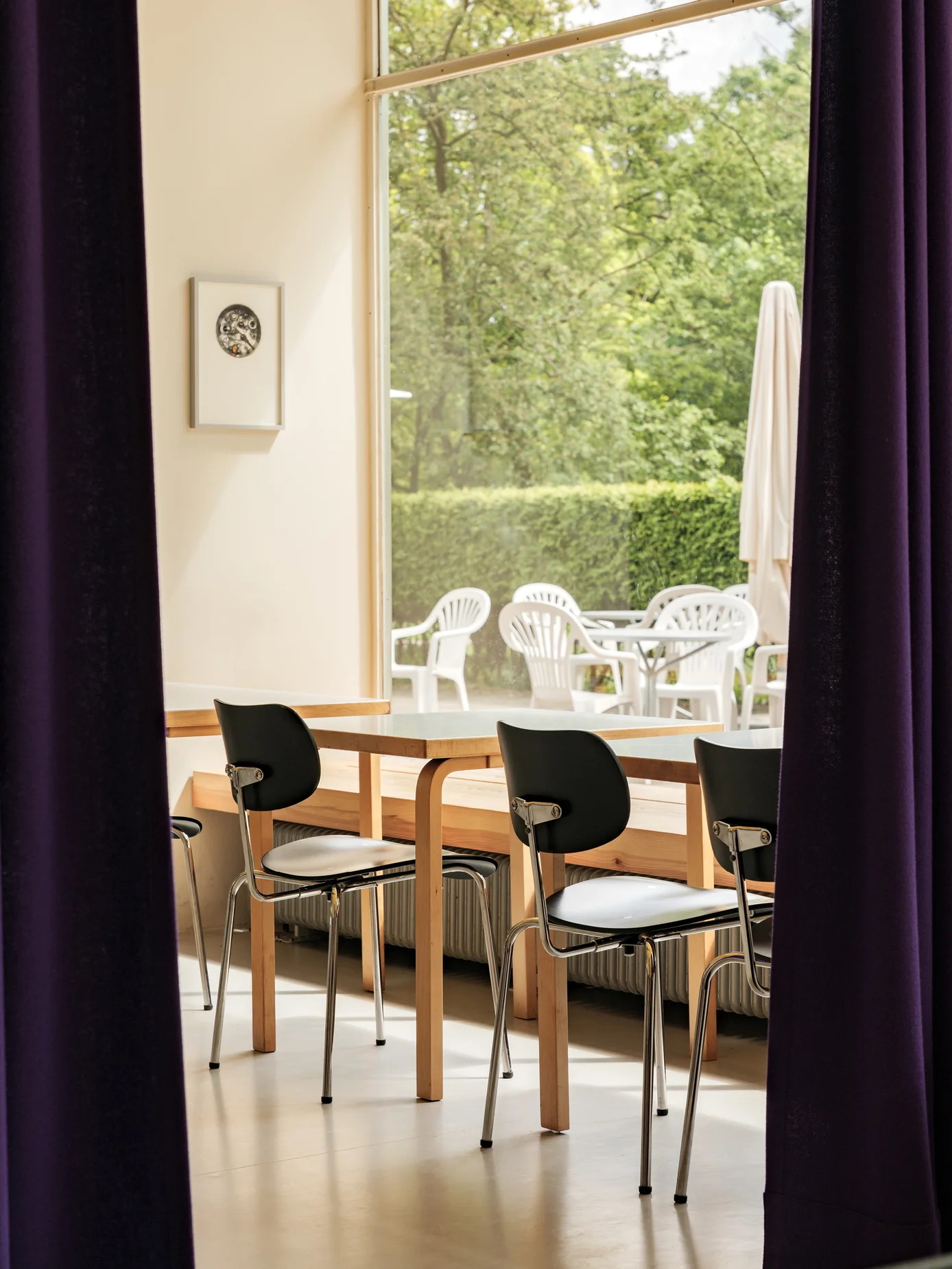
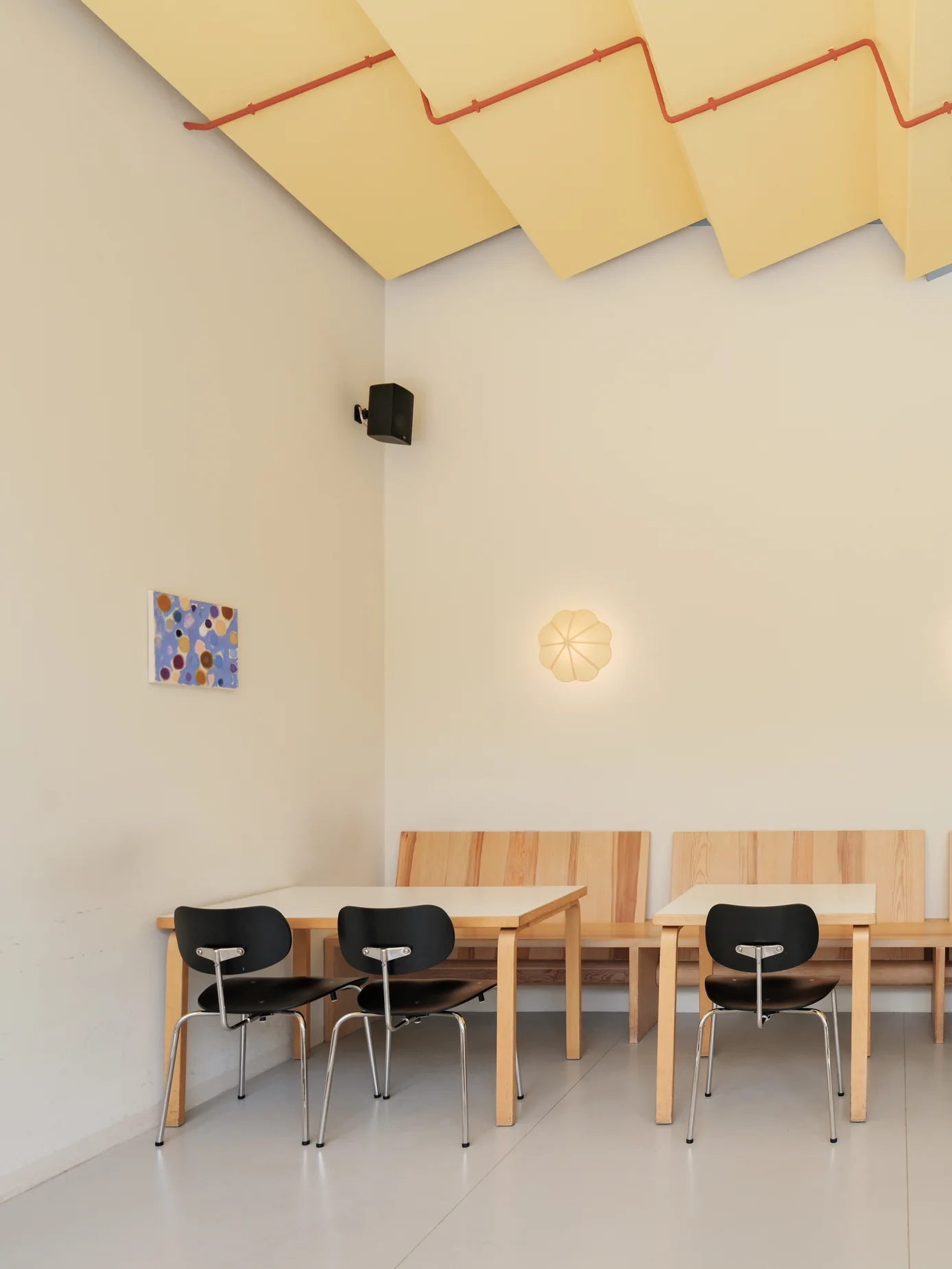
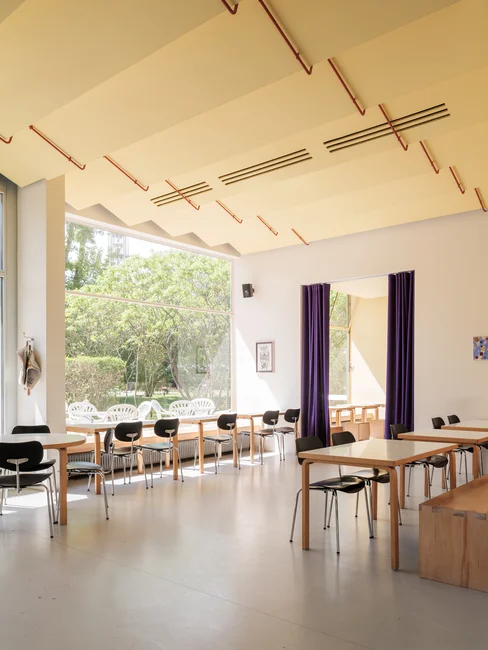
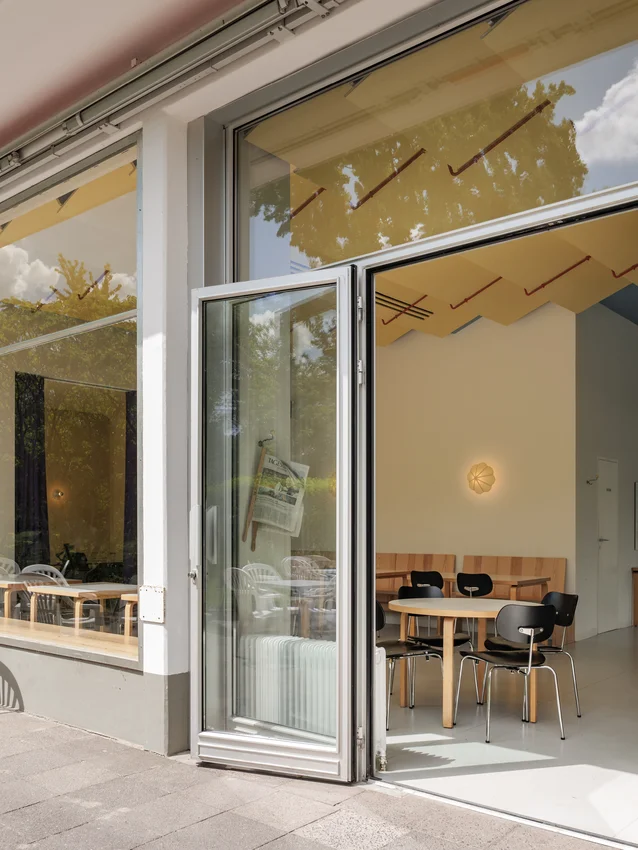
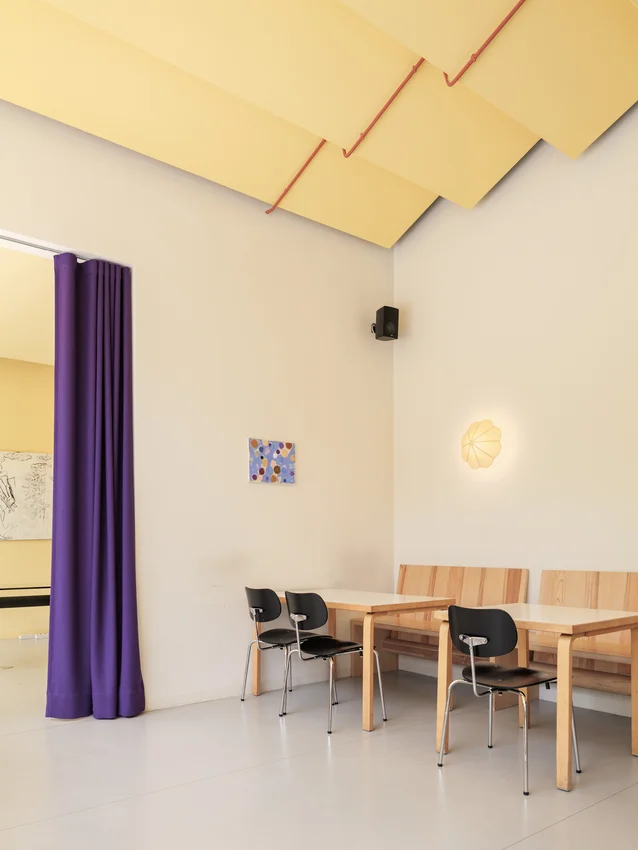
LH We developed the interior design together, with help from our friend and interior architect Johanna Karges. The starting point was the building’s distinctive architecture and the wish to make the original atmosphere of the late 1950s tangible again, without staging a historical reconstruction. We had already gained some experience through the renovation of our own apartment in the district, although in hindsight that was no comparison. At the café, we worked closely with the heritage conservation authorities and studied countless historical plans, photographs and colour analyses. Above all, though, we first removed everything that wasn’t original: partition walls that had been added, bricked-up windows and several suspended ceilings. It was important to us to create a space that is understated in its design and directs the gaze to the architecture, the nature and the people.
Which materials, colours and central design elements shape the space, and why were these in particular chosen?
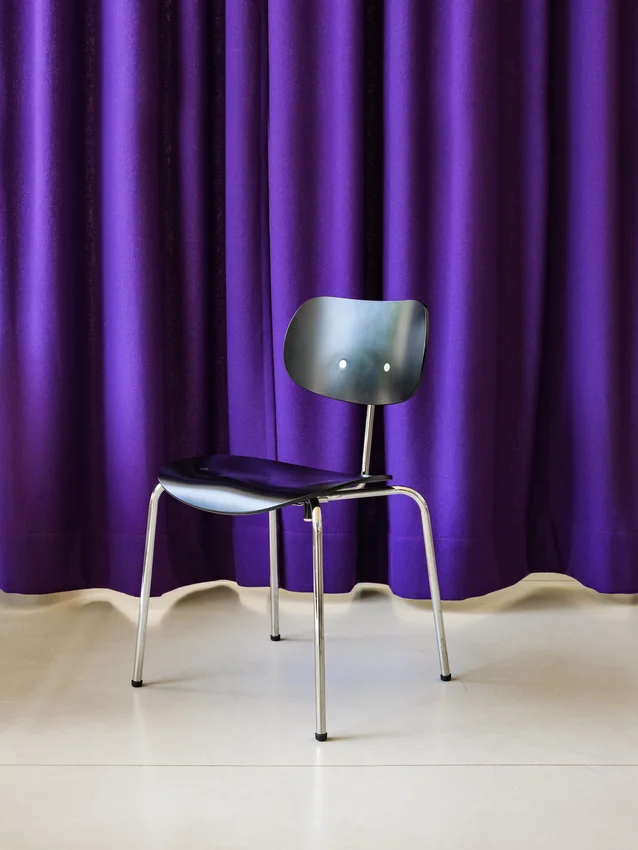
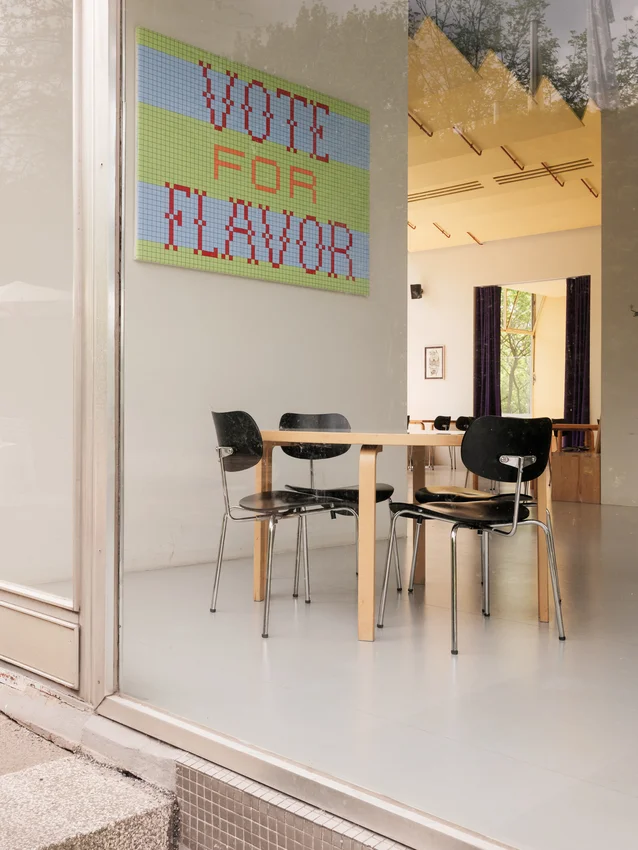
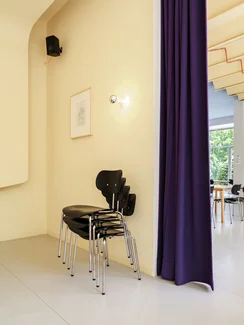
LH The distinctive colour scheme in yellow and blue takes its cue from the building’s original palette. Many surfaces were restored or reconstructed in accordance with historical findings. It’s especially nice that, thanks to the colours, the link to the “Schwedenhaus” now becomes clear once more. These are complemented by natural materials such as wood, a period-typical rubber floor, tiles that were also used in the Barbican Estate in London, metal, and a purple curtain by Kvadrat, designed by the Danish designer Nanna Ditzel in 1965. What shapes the space above all are the large window surfaces, the clear geometry of the room, and the connection between interior and exterior. We wanted to create an atmosphere that feels calm, timeless and self-evident. The design is not meant to dominate but to highlight the qualities of the architecture and the surrounding landscape — which is why it was clear from the outset that we wanted to draw on furniture designs by the architects of the houses around us: tables by Alvar Aalto and Le Corbusier, and of course the iconic SE 68 by Egon Eiermann, who built a slab apartment building right across from the café.
What particular challenges arose during the planning or implementation, and how were they resolved?
LH The greatest challenge was reconciling the requirements of a contemporary hospitality business with the stipulations of heritage conservation. Many structural interventions had to be carefully planned and coordinated with the relevant authorities. This process required patience and numerous consultations, but ultimately meant that many of the building’s original qualities could be preserved. It is precisely this engagement with the existing fabric that makes the project so special to us.
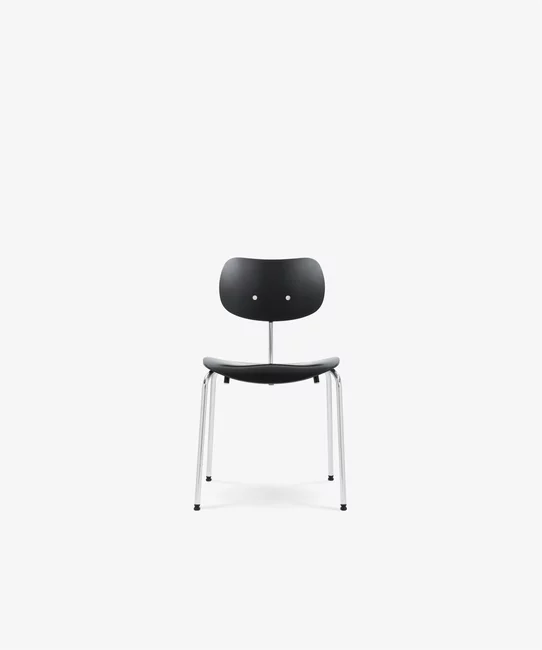
You chose the SE 68 SU chair in black/chrome. What criteria were decisive for you in selecting this furniture?
LH The choice fell on the SE 68 because it fits the building superbly, both in design and historically. The design dates from the same era as the Hansaviertel and embodies many qualities that matter to us: clarity, functionality, lightness and a timeless formal language. At the same time, the furniture had to meet the demands of a lively café operation. The SE 68 is robust, comfortable and ages beautifully.